Triggered Email Scheduling and Delay Patterns in SaaS
Agents dispatch triggered emails faster than infrastructure catches their mistakes.

Triggered email in SaaS runs on a clock that is different from scheduled broadcast email. The timer starts the moment a subscriber does something, not when a calendar slot arrives, and treating those two clocks as interchangeable corrupts both how the email gets sent and how its results get measured.
Triggered email timing as an infrastructure problem
Traditional email automation follows fixed rules set by a person: join a list, wait a set number of days, send. The delay is a number a human chose, and a human can review it, catch a mistake, and fix it before the next batch goes out. Agentic workflows don't work that way. The agent decides which email to send, what goes in it, and when to send it, based on data it's reading in real time. That's a different kind of decision-maker making the call, and it changes what happens when the call is wrong.
If a human-reviewed drip campaign has a misconfigured delay, it gets caught quickly, usually before the next scheduled batch goes out. A bad delay rule running inside an agent loop doesn't wait for a human to notice. It repeats across thousands of sends before anyone sees a problem, because the agent has no reason to pause and check its own work unless something is built to make it pause.
The deeper mismatch is speed. An agent can read an event, decide on an action, and fire off an email within milliseconds. Most email infrastructure in use today was built on the assumption that a person sits at every decision point: someone reviews the send, someone manually retries a failure, someone checks a dashboard for errors. Removing that person doesn't make the system safer by default. It becomes faster at doing whatever it was told to do, including the wrong thing.
Getting delay patterns right for SaaS triggered email means knowing which failure modes belong to which pattern, then choosing infrastructure that catches those failures before a send leaves the building. The question that matters isn't how long to wait before sending, but what breaks, and for whom, if that wait goes wrong at the scale an agent operates at.
The canonical delay patterns for SaaS triggered email
Every delay pattern in SaaS triggered email is built around a different goal, and the right delay for each one comes from the psychology of the event that triggered it, not from some universal rule of thumb about how long to wait.
Welcome sequences exist to catch a subscriber at peak intent. A 24-hour delay doesn't just shave a little off that number, it throws away most of the intent signal that made the moment valuable.
Abandoned cart sequences work on a three-touch rhythm, spaced at roughly one hour, one day, and three days after someone leaves without buying. Collapse these into a single email, or stretch the sequence past three days, and the campaign stops reaching the people each touch was built for.
Post-purchase sequences chase two separate goals, so they need two separate clocks. Delivery confirmation is a near-instant, SLA-driven send: the customer wants to know the order went through, right away. Review requests and engagement prompts come days later, and they depend on behavior, not on a fixed deadline. Running both through one queue creates latency failures on the transactional side, where speed actually matters.
Transactional email belongs in its own category. Its timing is a latency SLA, not a scheduling decision. Missing those windows costs the business money: the user abandons the action, disputes the charge, or opens a support ticket. That behavior is measurable, and it's expensive.
How each delay pattern fails differently at agent scale
Each pattern breaks in its own specific way once an agent is dispatching the sends, and infrastructure built only to catch generic send errors misses most of what actually goes wrong.
Take cart abandonment. The three-touch sequence only works if the agent knows, at the moment of touch two, whether the cart was already recovered after touch one. Without durable tracking of its own prior sends, the agent can fire a second reminder into a purchase that already happened. That's not a cosmetic mistake. It damages deliverability signals and it tells the customer the business isn't paying attention to its own records.
Suppression handling has a similar timing gap. Re-engagement sequences are supposed to skip addresses that already unsubscribed or bounced, but if the suppression list only gets checked when the list is built, and not again at the moment of send, an agent can fire into addresses that should have been excluded. At the speed an agent dispatches sends, that window is wide enough to produce hard bounces and spam complaints before anyone updates the suppression check.
Welcome sequences fail on a timing distinction that's easy to miss: event detection latency and event processing latency are not the same thing. A signup webhook arriving at the agent, and the agent actually sending the welcome email, are two separate moments in time. Without precise timestamp tracking between those two moments, the SLA on that high-intent first email degrades without anyone noticing.
Transactional sends fail when they get retry logic meant for bulk marketing. If a password reset fails once and gets retried under bulk-send rules, the same reset link can land in someone's inbox several times in rapid succession, and that confuses the recipient and burns sender reputation on repeated high-frequency sends to one address. The fix is a hybrid dispatch pattern: synchronous delivery for the highest-priority sends, asynchronous for everything else, with a shared retry and dead-letter path connecting them. The two queues have to stay architecturally separate rather than getting merged at the API level for that to work.
What ties all of these failures together is that none of them throw an error. The send completes successfully. The wrong message just goes to the wrong person at the wrong time, and the first sign of trouble is a deliverability metric sliding downward days later. Agents process events far faster than email infrastructure was built to respond to mistakes, and purpose-built agentic email infrastructure, with pre-send linting guardrails, catches that mismatch before the failure spreads across thousands of sends.
Why post-send monitoring catches failures too late
Post-send monitoring is the wrong tool for catching agentic email failures, because by the time a bounce rate or complaint rate moves enough to notice, the bad send has already reached inboxes, and at the speed an agent dispatches mail, thousands of copies of it have too.
Monitoring dashboards track bounce rates, open rates, and complaint rates. All three are downstream signals that need a population of sends before they become statistically visible. For a human-run campaign, that population builds up over hours or days, giving someone time to catch a problem mid-stream. For a runaway agent, that same population can accumulate in minutes.
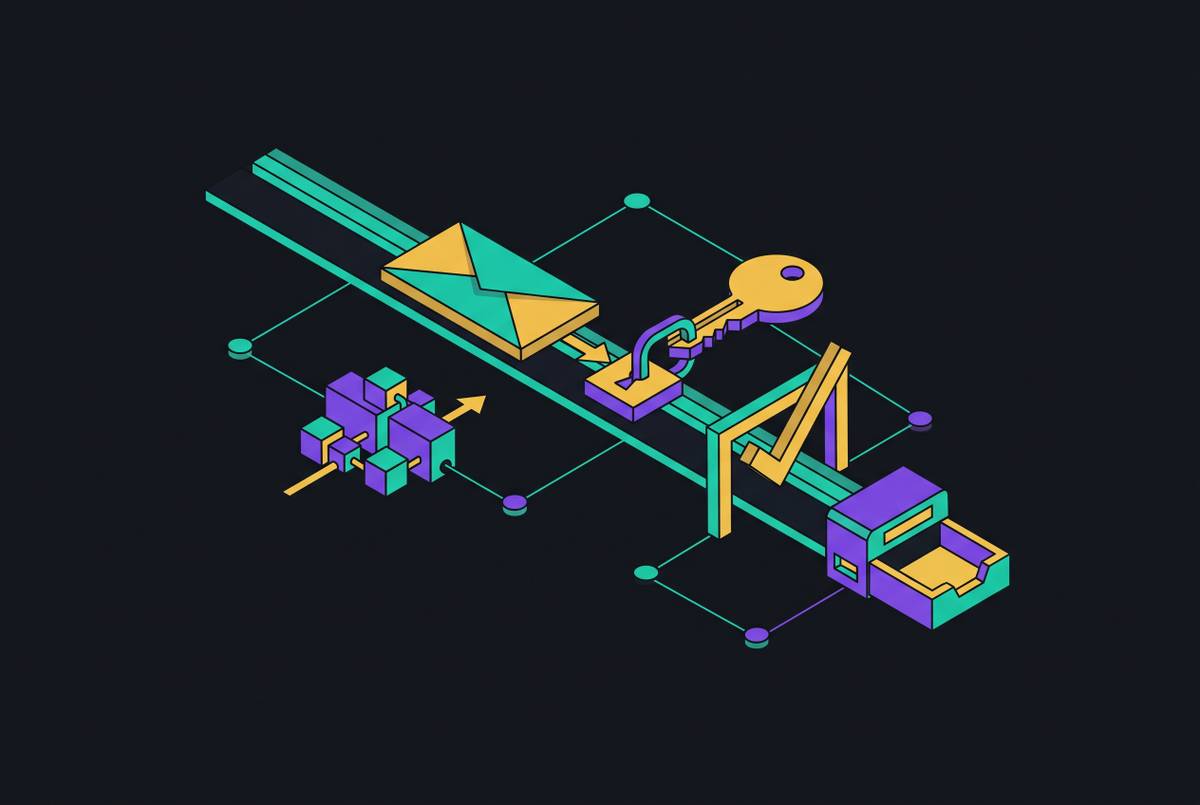
The better approach is a pre-send linting layer: every send gets checked before it leaves the platform, structural and compliance problems get flagged, and the system returns a machine-readable error with a specific fix attached, not a warning sitting in a dashboard that nobody's watching. That distinction matters specifically because an agent can't read a dashboard. It needs a structured error it can parse, act on, and log on its own, without a person translating the warning for it.
A linting layer worth the name checks for unrendered template variables, flagging cases like {{first_name}} appearing literally in the body text where a name should be. It checks for missing List-Unsubscribe headers; the Unspam.email 2025 corpus found these absent in roughly 86% of emails it scanned. It checks recipient addresses against active suppression lists, and it checks whether a send would push volume past an agent's rate limit. Welcome sequence failures, cart abandonment state corruption, and re-engagement suppression errors all stay invisible until they've already hit inboxes; agent-built email infrastructure vets each send against compliance and template rules before it goes out, catching exactly that failure mode.
Preventing a runaway agent takes enforcement at the infrastructure layer, not caps written into application code. So you need per-agent rate limits enforced at the API level, domain policies capping how many sends go out per hour, recipient allowlists during early deployment, and escalation triggers that pause the agent and alert a person once a threshold gets crossed. Caps written into application code can be bypassed by an agent's own retries. Caps enforced at the API layer can't.
Retry Logic and Sequencing Rules for Agent-Driven Sends
Retry logic and sequencing rules built around human-reviewed sends create new failure modes once an autonomous agent takes them over, because the assumptions that made them safe (a person checking state, a person judging timing, a person stepping in when something looks off) no longer hold.
Not every failure should trigger a retry. None of these should be left to the agent's judgment. They need to be outcomes the infrastructure enforces on its own.
Sequencing rules need to check state, not just elapsed time. The cart abandonment three-touch sequence is only safe if each touch checks that the triggering condition, the abandoned cart, still holds before it fires. A sequence that advances purely on a timer, with no state check, will fire into carts that already converted, transactions that already completed, and addresses that already unsubscribed.
Before an agent acts on an inbound reply and advances a sequence because of it, SPF, DKIM, and DMARC results on that reply need to be checked. The only real defense is treating all inbound content as untrusted data to evaluate, never as instructions to follow. That risk is built into the architecture of agent-read email, not a hypothetical edge case.
Domain architecture and authentication as the non-negotiable foundation for agentic sends
Everything covered so far, the delay patterns, the retry logic, the sequencing rules, depends on a sending domain that's configured correctly in the first place, because reputation damage caused by an autonomous agent spreads faster and takes longer to undo than reputation damage caused by a human sending mistakes one at a time.
An agent should never send from a company's primary corporate domain.
Segmenting by risk at the subdomain level matters too. If an agent running a bulk sequence trips complaint-rate thresholds, it shouldn't be able to drag down the reputation of the subdomain handling password resets.
Authentication requirements have moved from suggestion to enforcement. One-click List-Unsubscribe and keeping spam complaint rates under a low threshold are also enforced requirements at the major mailbox providers now, not nice-to-haves.
For an autonomous agent, compliance has to be on by default. Relying on a developer to remember to attach unsubscribe headers or check a suppression list at the moment of send is the wrong model for a system where no human is reviewing each send before it goes out. Those checks need to be enforced by the infrastructure itself, before the email exits the system, not left to application code an agent might simply never call.
MCP tooling for email operations
A standard protocol for tool access is becoming the way agents actually reach email infrastructure: instead of a developer wiring up a REST client by hand, the agent calls a tool exposed over that protocol, and that tool either does the right thing automatically or it doesn't. First-class agent support means the tool makes it hard to do the wrong thing in the first place, not that an MCP server merely exists and technically works.
GIC - Agent Send's architecture gives a concrete sense of what that looks like in practice. A sandbox key comes back in under a second, and simulator inboxes return every delivery outcome, delivered, bounced, complained, so the integration gets fully tested before a real person ever receives a message. Every send is linted before anyone reads it, which is the pre-send interception argument made concrete: a 422 error for an unrendered template variable comes back to the agent as something it can parse and act on, not a warning buried in a dashboard it will never open. The platform works with Claude Code, Cursor, Codex, Devin, the OpenAI Agents SDK, and any other MCP client, which reflects the reality that the agent calling the tool might be running inside any number of different environments.
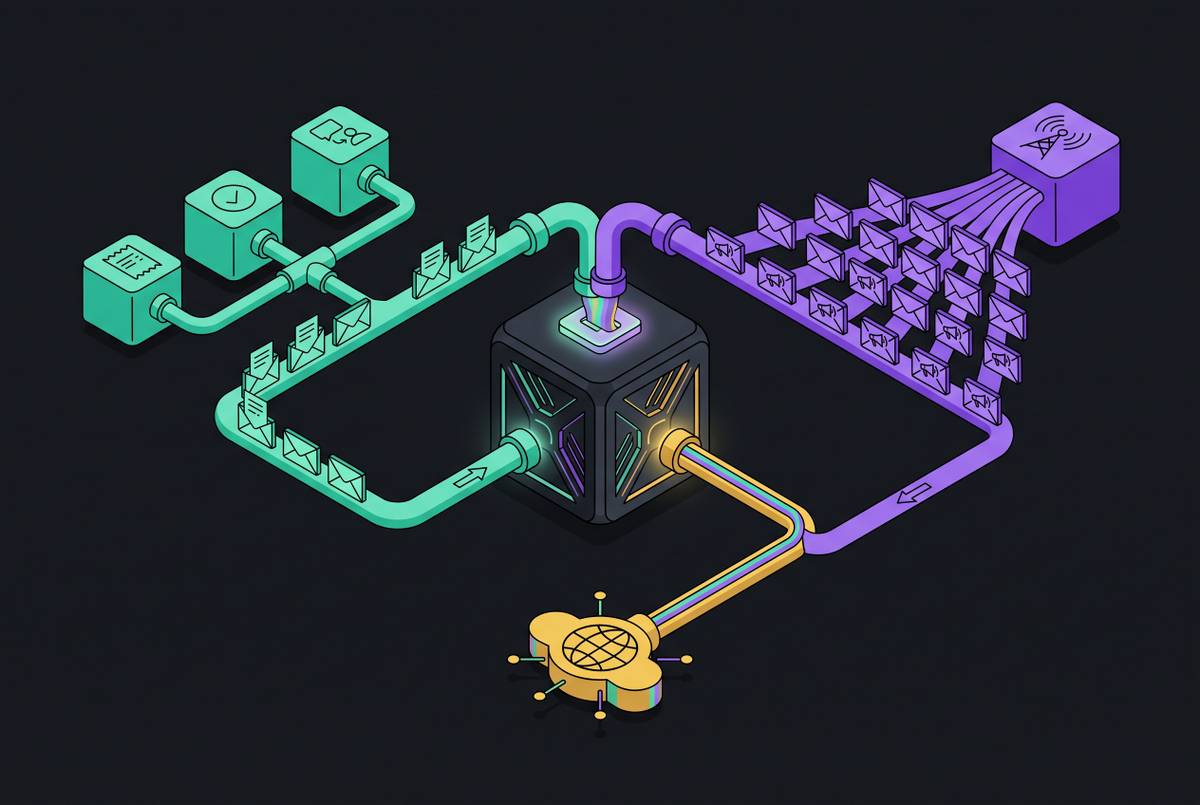
Because transactional email and triggered marketing email serve different goals and break in different ways, routing both through a single undifferentiated queue corrupts the timing guarantees each one depends on. That's a central reason platforms that handle transactional and marketing email through one API, with routing and prioritization built in for each, are better positioned to serve agent-driven sending than tools that treat all outbound mail as one undifferentiated stream. GIC - Agent Send's pricing structure reflects that same logic: guardrails, MCP tooling, and API access are included on every plan, from the free tier's 3,000 emails a month up through the Pro plan's 50,000 and the Scale plan's 150,000, rather than treating compliance checks as a premium feature reserved for higher tiers.
None of this replaces the engineering discipline laid out in the sections above: idempotency keys, state-aware sequencing, domain segmentation, enforced authentication. What MCP tooling changes is how directly an agent can reach email infrastructure, and whether the tool it calls is built to catch its mistakes before they reach an inbox or built only to record them after the fact. The difference between those two designs is the difference between infrastructure an agent can be trusted to drive and infrastructure that still needs a human standing behind it.