Why Human-Centric Email APIs Become Bottlenecks When Agents Own the Inbox
Agents need email APIs built for autonomous operation, not human oversight.
Email infrastructure purpose-built for AI agents must enforce provisioning, error correction, compliance, and rate governance without relying on a human to approve each send. Human-centric email APIs become bottlenecks because they leave parts of those responsibilities to a person. AgentSend’s pre-send linting and structured errors show how an API must move from accepting instructions to checking whether it can safely carry them out.
Why human-centric email APIs were built around a human decision point
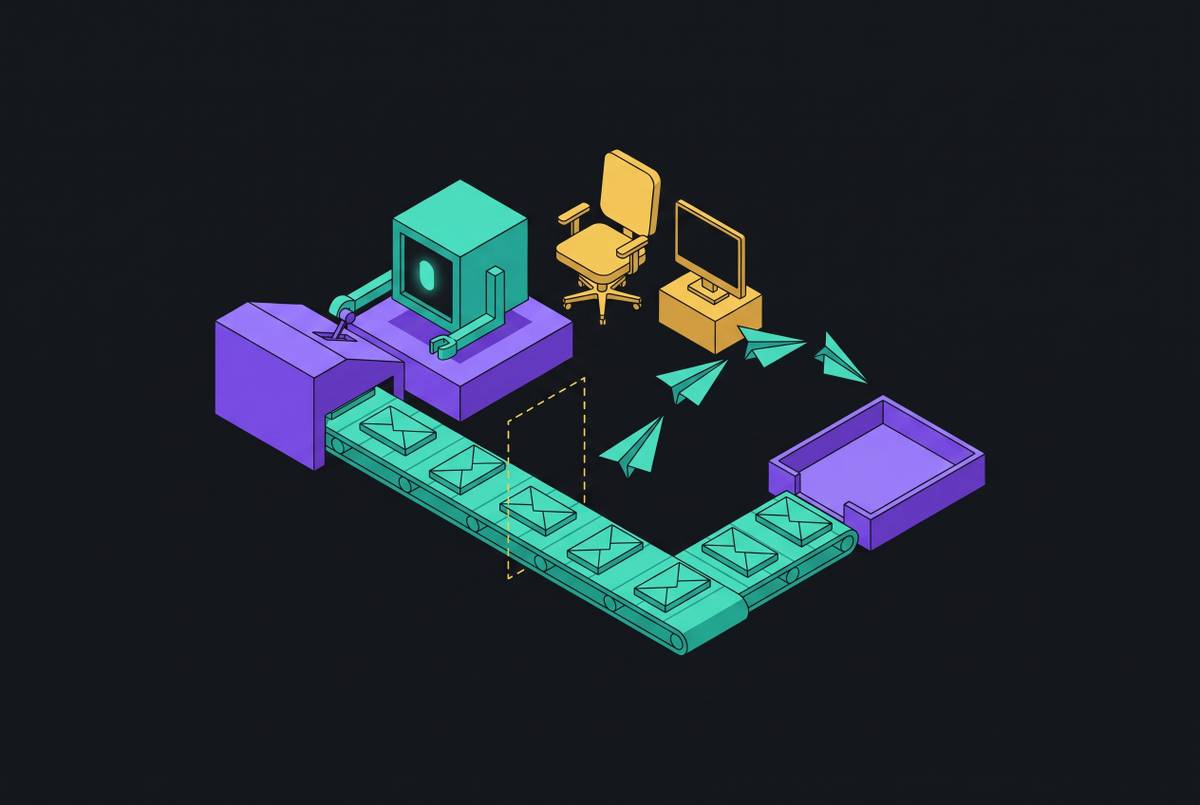
Conventional email APIs were built to let applications send messages while a human was still in charge of setup, review, and dispatch. A developer authenticated the domain, interpreted onboarding failures, and added the required unsubscribe controls. An operator reviewed a campaign and decided when it should run. The API simplified execution without replacing those decisions.
The architecture therefore incorporated the human decision point. Dashboard alerts assumed someone would inspect them, while documentation assumed someone would translate its requirements into application code. Campaign controls similarly depended on a person choosing a reasonable sending schedule. An agent removes that checkpoint. When it writes, configures, and dispatches autonomously, mechanisms that depend on someone noticing a problem become unattended.
Infrastructure for the Agentic Web: Gap Analysis and Architecture from the Agentverse Platform distinguishes human email products, which assume a browser, consent screen, and person who can inspect failures, from traditional transactional APIs, which assume mostly outbound traffic. Neither assumption fits an agent that needs an isolated identity and must act on incoming messages without someone watching over it. The mismatch begins before the first send. It stays with the agent through error recovery, compliance, and volume control because each stage still leaves some of the work to a human.
Gap one — provisioning assumes a human will complete domain setup
An agent first needs a sending identity, but conventional onboarding places human work between the request for that identity and its use. Domain authentication requires DNS changes, DKIM configuration, sender verification, and interpretation of setup errors. Those steps precede any useful email activity. An API-driven workflow stalls when its next required action is available only in an onboarding wizard or dashboard.
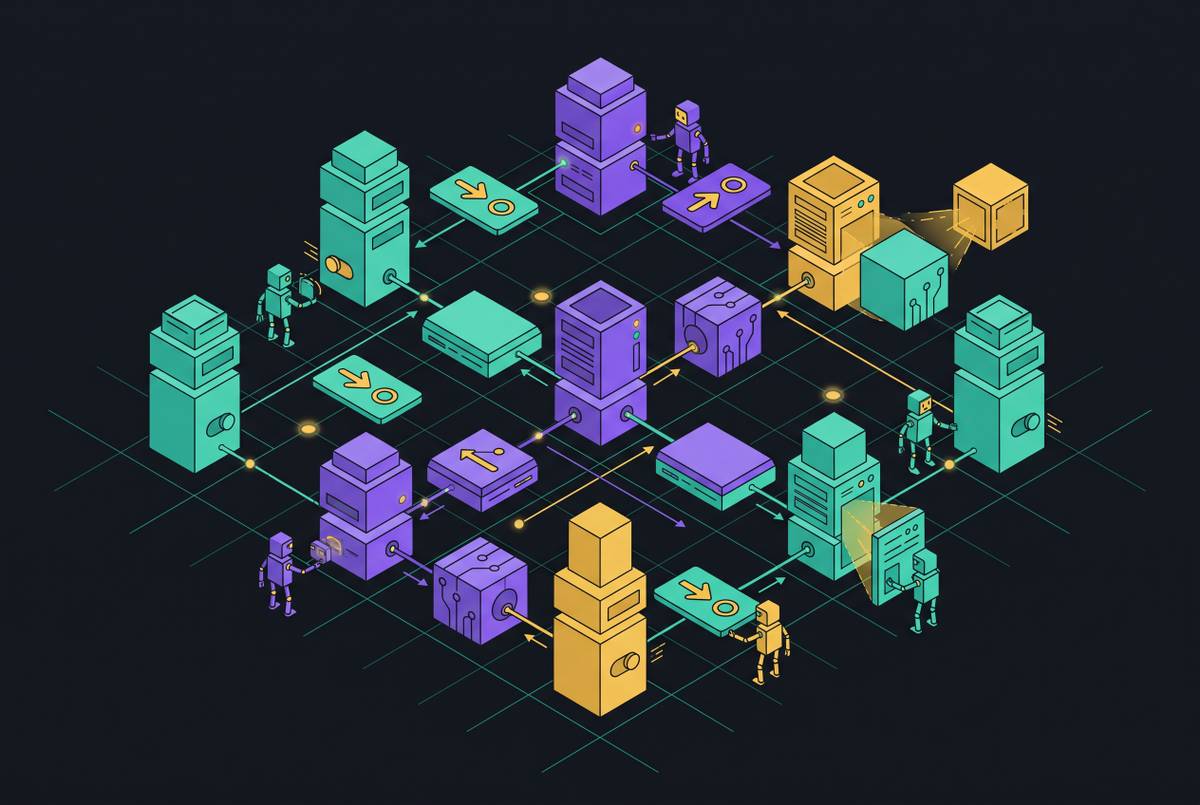
This becomes more restrictive when the agent serves multiple tenants. A support agent needs isolated identities in place of one shared sender address, and it may need to create those identities at runtime. Manual setup turns each new tenant into another handoff. The gap analysis identifies the missing mechanism as programmatic inbox provisioning, without which a multi-tenant agent cannot acquire isolated identities when it needs them.
The architectural alternative is a provisioning call that produces a functional sending identity without a person completing the process. Purpose-built platforms automate SPF and DKIM configuration so that a script can perform setup through a single API call. DMARC remains a separate configuration consideration in the provisioning model described here. Automated provisioning should not be confused with automatic completion of every authentication policy.
Nylas’s 2026 provider guide places the inbox model first in its evaluation for this reason. A service that cannot provide the identity model the workflow needs creates a dependency before sending or receiving can begin. Later capabilities cannot remove that initial gate. Provisioning must therefore be evaluated by what the infrastructure can create autonomously.
Gap two — error handling was designed to be read by a person, not acted on by a machine
Once an agent has an identity, it needs failures it can act on. Conventional APIs often surface problems through dashboard alerts, email notifications, and human-readable explanations. A person can interpret these signals and decide whether to correct the request, retry it, or investigate elsewhere. An unattended agent needs a more exact contract. A vague error leaves it choosing between stopping, retrying blindly, or continuing in a broken state.
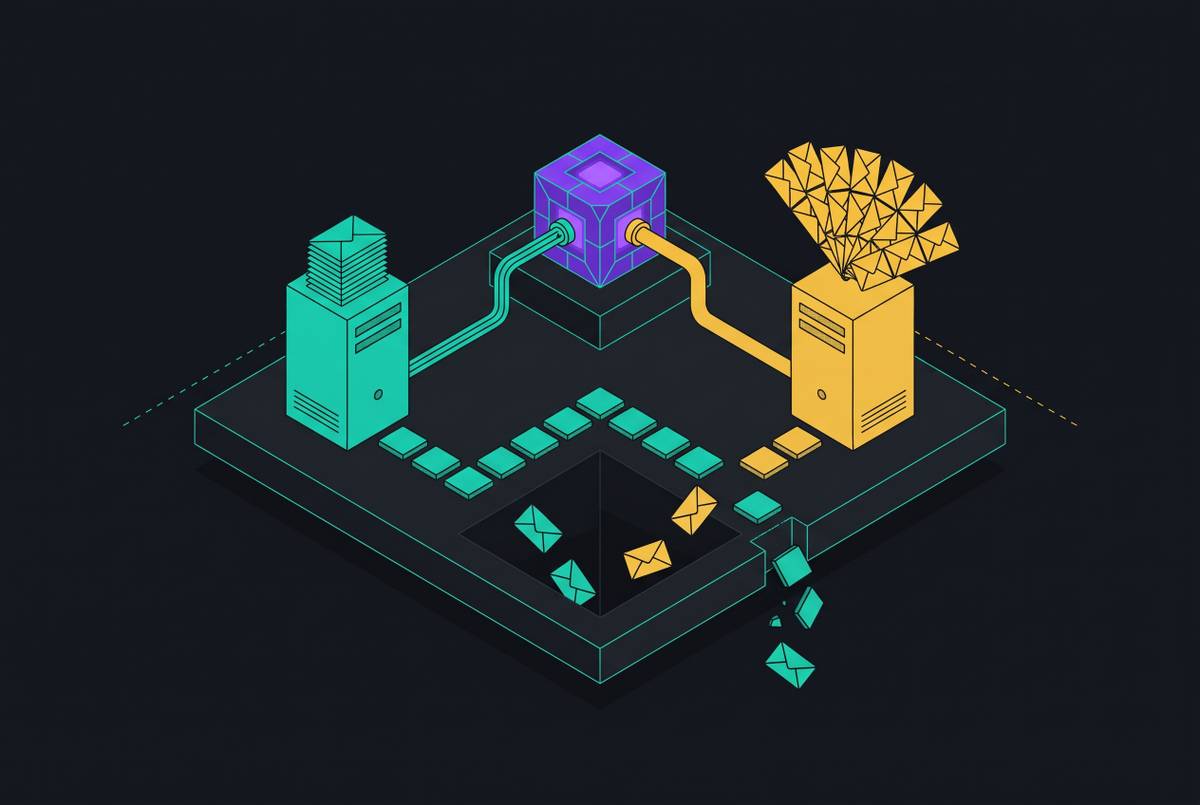
Retries make that ambiguity operationally dangerous because email delivery and agent execution can both repeat. Infrastructure can redeliver the same incoming message under normal failure conditions. If every delivery launches a new send loop, the agent can duplicate messages and actions while corrupting thread state. The incoming event must retain its identity across retries.
The gap analysis also identifies a mismatch in idempotency windows. A short window can cover a web request retried within seconds, but not an agent that wakes on a schedule and repeats a send after that window expires. Business-event keys provide the complementary pattern. A key tied to the invoice or order, rather than the individual request, lets a retried tool call, repeated agent step, or webhook redelivery collapse to one send, provided the infrastructure retains that protection across the relevant retry period.
AgentSend’s pre-send linting checks requests before dispatch and returns machine-readable errors that say how to fix them. Its documented error model has a code, message, and fix for every 4xx response, and its preflight tool runs the send gates without sending anything. These checks belong at the API boundary. A guard inside the agent’s process can be skipped by a forgotten branch, a retry that builds a new client, or another script using the same key.
Gap three — compliance enforcement is opt-in, so agents silently skip it
A request can be syntactically valid and still omit required compliance controls. Conventional APIs leave developers to add unsubscribe headers, configure List-Unsubscribe, and check suppression lists. That model assumes a human read the documentation and implemented the obligations before sending began. An agent can submit exactly what the API permits while silently omitting what the sender must provide.
The omission is especially consequential when a contact has already unsubscribed. An autonomous send does not transfer responsibility from the sender to the tool that executed it. The gap analysis identifies CAN-SPAM, GDPR, and CASL as frameworks that place liability with the sender. The human authorization gate persists partly for that reason. Removing it from the workflow does not remove the sender’s legal obligations.
Provider requirements create a separate enforcement pressure. Bulk senders must authenticate with SPF and DKIM, publish an aligned DMARC policy, support one-click unsubscribe for promotional mail, and keep complaint rates below defined thresholds. Meeting these requirements cannot rest on whether an agent remembers a checklist for setting up a campaign. Authentication is tied to the sending identity, while message controls and suppression checks must stay in force whenever the agent sends on its own.
The architectural response is compliance on by default at the API layer. Required unsubscribe headers and List-Unsubscribe belong in the send path, and suppression checks must run before a request is accepted, without leaving the application a choice about running them. These controls must still apply when a branch is skipped. This enforces the covered requirements independently of how an agent was prompted or whether a developer remembered to implement them, while leaving the sender legally responsible.
Gap four — rate governance built for human campaigns cannot contain agent send velocity
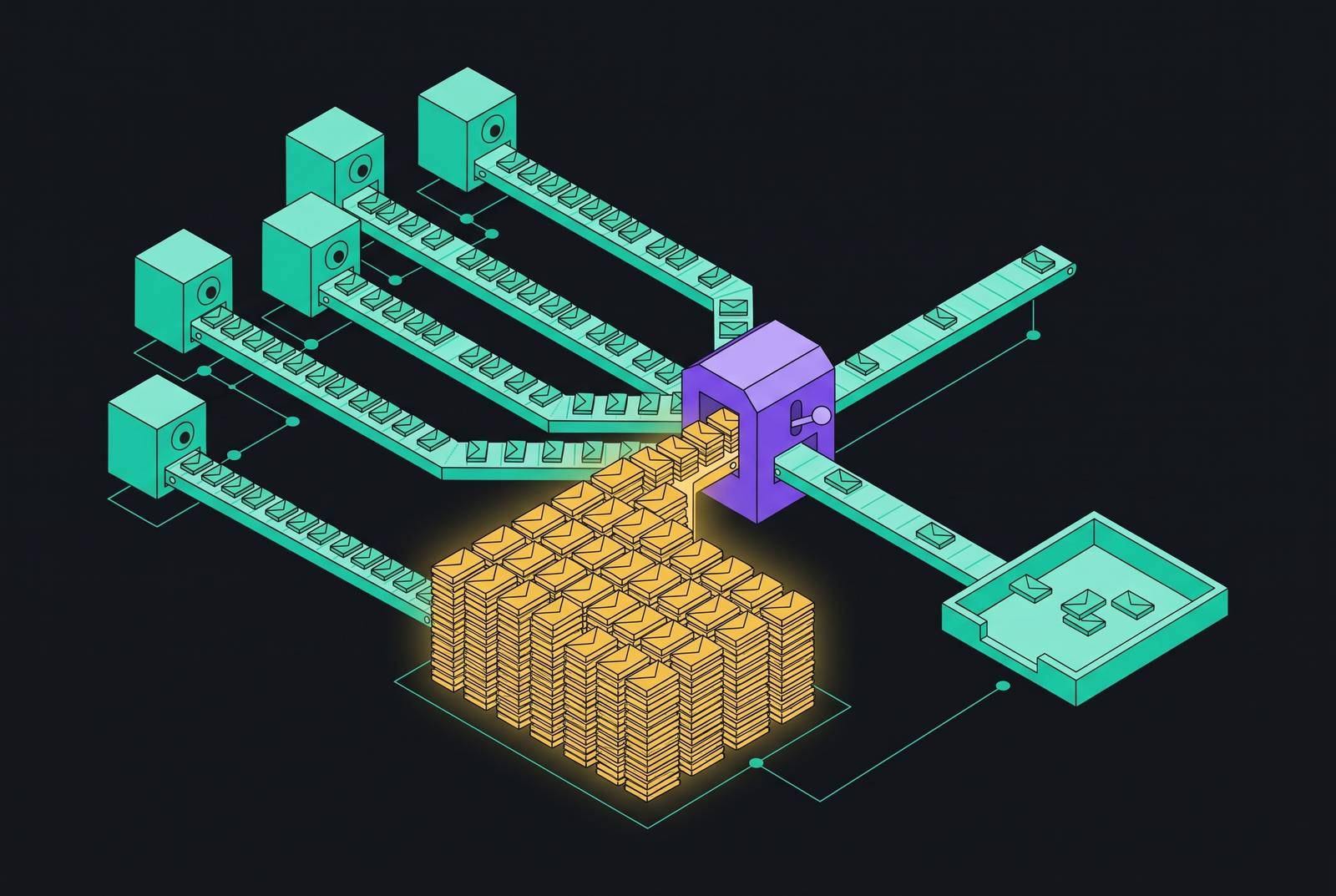
Even a correctly provisioned agent with actionable errors and default compliance controls can send at a cadence that human campaign controls were not designed to contain. Daily caps for an account and campaign windows assume someone reviews a campaign and decides when to send it. Human attention bounds that process before the API limit does. An agent loop has no equivalent pause. Given a contact list, it can exhaust a human-scaled limit in minutes.
A person sending a message to the wrong audience may reach a few people, while an agent can reach many thousands before anyone looks. Once complaints pass provider thresholds, they can harm the whole sending domain, including human email. An account-wide cap sets a shared limit that any agent holding the key may consume.
The gap analysis identifies per-agent rate limits, recipient allowlists, and audit logs as missing controls in that model. Infrastructure-level send caps and alert thresholds make the agent, rather than the account alone, the unit of governance. Domain segmentation addresses a different part of the risk. Separating agent traffic by subdomain and separating transactional from marketing streams limits the damage a misbehaving agent can cause to other mail.
A provisioning failure can push a workflow toward a shared identity, which makes error signals ambiguous and encourages retries. Without adequate idempotency, retries become duplicate sends. Without enforced compliance, those duplicates can omit required controls, and agent velocity can multiply the resulting complaints until the domain’s reputation is damaged. Rate governance is the final containment layer in a chain whose earlier links determine what gets amplified.
Why retrofitting a conventional API cannot close these gaps
A wrapper can make an application work better while leaving the underlying API’s guarantees unchanged. It can attach idempotency keys, parse error messages, and add checks before making a request. Those protections remain outside the acceptance boundary. They do not make a human-only provisioning step programmatic, and they cannot make compliance mandatory for every request reaching the underlying API through another path.
Building per-agent governance requires custom infrastructure. The same is true of enforcement that must apply to every key and every send. A retrofit reaches a dead end when it keeps using workarounds in the application to do the missing human’s work but still lets the API accept requests that skip them.
What email infrastructure purpose-built for AI agents enforces at the boundary
Agent-native infrastructure makes the four controls conditions of operation. Programmatic provisioning supplies isolated identities without a manual onboarding dependency. Machine-readable errors show how to fix a request, while event-based idempotency keeps that process from repeating actions. Default compliance and per-agent governance then constrain what can leave the system. The boundary enforces the conditions a request must meet to proceed.
AgentSend provides a concrete example through pre-send linting and structured error responses. Malformed template variables, missing unsubscribe links, and non-compliant structures can be identified before dispatch, with a specific fix returned for the agent to act on. Its preflight capability separates validation from sending. That is a useful architectural distinction because an agent can test whether a request passes the send gates without producing an external effect.
The full standard extends beyond validation. Provisioning must automate the supported authentication setup, with the treatment of DMARC made explicit. Send-time controls must add the required unsubscribe elements and check suppression lists without leaving developers a choice about turning them on. Per-agent caps, recipient allowlists, audit logs, and alert thresholds must operate in infrastructure. These are evaluation criteria that require verification even when a service describes itself as agent-native.
MCP-native tooling gives agents a structured interface for composing, validating, and dispatching messages as function calls. Tools can also include safety annotations that hosts use to require confirmation before a send executes. Those annotations serve a different purpose from boundary enforcement. They help a host govern tool use, but do not replace checks applied to every request accepted by the email service.
For an agent that must both send and receive autonomously, Nylas’s framework adds four evaluation axes, including inbox model, inbound email support, deliverability, and scalability. Outbound dispatch alone is not a complete inbox capability. The infrastructure must support the workflow and enforce its limits without a person having to fill each gap. Closing those gaps requires a design that does not depend on a human deciding when to send.