AI Agent Email Sending Without Human Oversight
Pre-send guardrails must replace the human checks that agents bypass.

AI agent email sending without human oversight requires pre-send linting and guardrails that replace the checks a human reviewer would perform. The send endpoint must block unresolved variables, missing unsubscribe requirements, suppressed recipients, unauthorized sender identities, and excessive volume before dispatch. Removing the reviewer is safe only when the infrastructure enforces those checks and returns a machine-readable error with a specific fix.
Why removing humans from email sending creates new failure modes instead of eliminating oversight
An agent dispatching a broken password reset to thousands of users at 2 a.m. illustrates the failure mode. No human is awake to catch it. The agent can compose the content, configure the domain, dispatch the send, and react to replies without a reviewer at any step. If validation exists only in human judgment, that workflow has removed the checks as well as the reviewer.
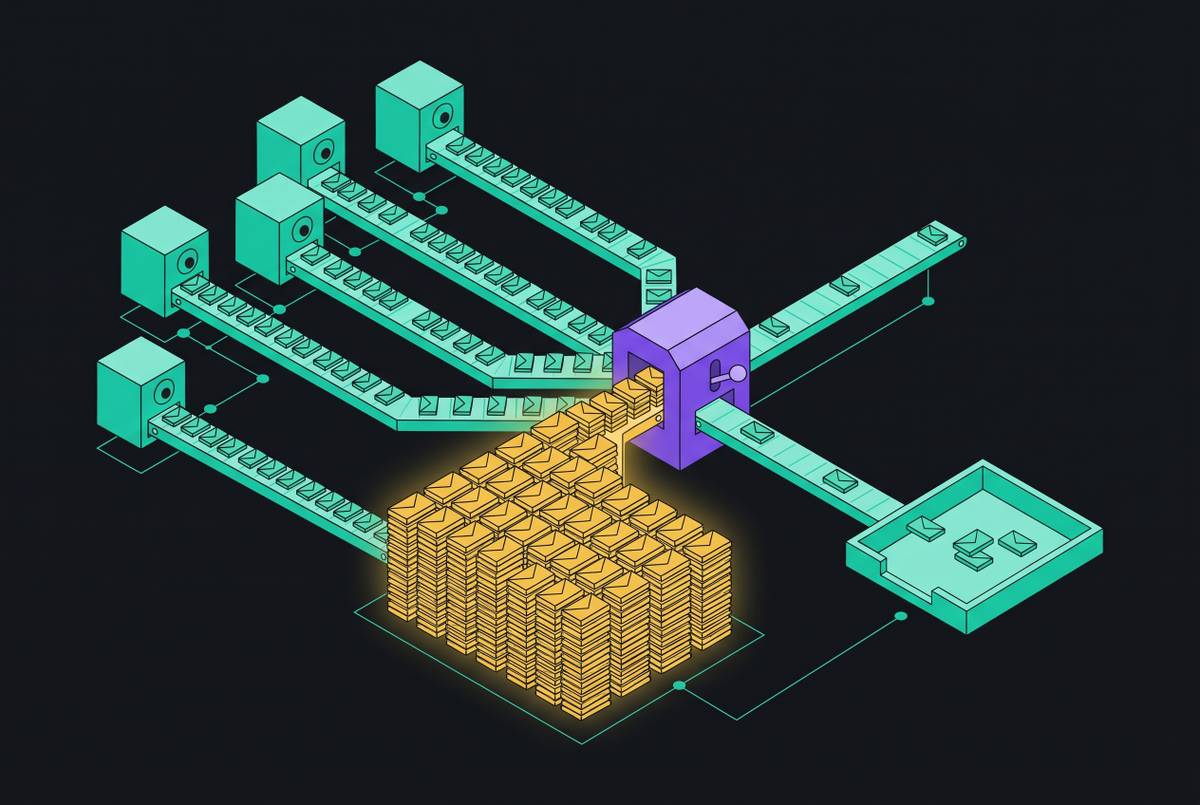
An agent can retry a send into a suppressed address or propagate one bad instruction across thousands of recipients before anyone notices. It can send more email in an instant, while sender reputation builds slowly and can take weeks to recover. The checks must move into infrastructure. Trust in this setting is an engineering property.
How conventional email APIs assume a human reviewer that agents don't have
Conventional transactional email APIs were designed around careful human operators. A developer writes the template, a marketer reviews the recipient list, and a compliance officer checks the unsubscribe footer. The API then delivers the email, leaving the people who checked it to enforce their decisions. That split works only if people still do those checks.
A broken merge tag exposes the gap. A human previewing a broadcast can notice that a recipient’s name never rendered, while an agent calling a send endpoint may receive no indication that anything is wrong. The endpoint can accept the message even though its content is unfinished.
The same architectural assumption extends beyond content. An agent building a recipient list programmatically may never consult suppression state, and a warning shown in a campaign interface does not protect a direct API call. The checks were in the operator’s workflow, and replacing that operator does not automatically move them into the API.
What the enforcement floor for bulk senders now requires, and why agents hit it differently
Gmail requires RFC 8058 List-Unsubscribe-Post headers for senders exceeding 5,000 recipients per day to Gmail accounts, effective February 1, 2024. Yahoo requires a functioning List-Unsubscribe header supporting one-click unsubscribe for bulk senders, publishes no numeric daily-message threshold, and describes the RFC 8058 POST method as highly recommended. Microsoft began enforcing bulk sender requirements on May 5, 2025, requiring SPF, DKIM, and DMARC. Its requirements recommended one-click unsubscribe.
Gmail moved to permanent 5.7.x rejection codes for bulk senders failing authentication requirements involving SPF, DKIM, DMARC, and PTR in November 2025. Complaint-limit and missing List-Unsubscribe violations instead result in spam classification or delivery degradation. These outcomes should not be conflated with hard rejection. Nor should the RFC 8058 one-click header be confused with the in-body footer link, because they are distinct requirements.
Agents can cross a volume threshold within one task invocation, without any component surfacing the compliance implication. A human scheduling a broadcast has a natural opportunity to notice that volume. CAN-SPAM, GDPR, and CASL place liability with the sender, so an unintended send to an unsubscribed list remains the sender’s responsibility. By the time provider enforcement or a recipient complaint shows what went wrong, it is too late to stop that send.
Why pre-send enforcement is the correct abstraction, not post-send monitoring
Monitoring can report a broken or non-compliant message after recipients receive it. It cannot undo that exposure after the fact. A send endpoint that rejects invalid requests prevents the agent from treating an unchecked action as a completed step.
Engineering Robustness into Personal Agents with the AI Workflow Store argues for integrating rigorous software engineering processes into the agentic loop to produce hardened, deterministically constrained workflows. Applied to email, that principle means validation must constrain the send operation itself. It must work even when the agent forgets to run a separate check. Otherwise, a retry loop can do the same faulty thing again while alerts wait for someone to respond.
The rejection must also support correction within the workflow. A machine-readable error with a specific fix gives the agent a field to repair and a reason the request was blocked. A vague delivery failure does not distinguish missing content from an invalid recipient or an authentication problem. The error format is therefore part of the enforcement contract.
How do you prevent broken merge tags and missing unsubscribe links before sending?
Template validation must check both the subject and body before the send call ends. A single unrendered {{first_name}} in a broadcast to thousands is enough to demonstrate why delivery acceptance is an insufficient test. The pre-send layer should return the unresolved variable’s name and position as a structured error. That gives the agent a concrete correction target.
Unsubscribe enforcement addresses a different kind of omission. For a qualifying marketing or bulk message, the guardrail should reject a send missing either the RFC 8058 List-Unsubscribe-Post header or the in-body footer link, while checking the List-Unsubscribe requirements. Compliance should be on by default for agentic sends. Requiring an agent’s developer to opt in leaves the protection absent precisely where no human reviews the outbound message.
Every recipient must be checked against suppression state, including unsubscribes, hard bounces, and complaint records, before execution. Sender identity validation must confirm valid SPF, DKIM, and DMARC records and authorization to use the identity. These checks protect more than a single message. Domain reputation outweighs IP reputation for inbox placement decisions, so an improperly authenticated send exposes an asset that may not recover quickly.
Per-agent rate limits must be enforced at the API layer so that a runaway workflow cannot get around them through what the application does. A maximum number of sends to any single recipient domain per hour catches concentration that a per-agent limit can miss. Transactional sends also need an enforced idempotency key derived from the business event, such as invoice_1234_receipt, so retries across agent sessions resolve to one send.
Permissions provide a separate line of enforcement. Read, draft, test, and production-send scopes allow an operator to grant only the authority an agent needs. Distinct draft, test-send, and production-send operations make that split enforceable. A single undifferentiated send endpoint does not provide the same separation, even if its content validation is thorough.
How idempotency and domain isolation make agent email infrastructure recoverable when things go wrong
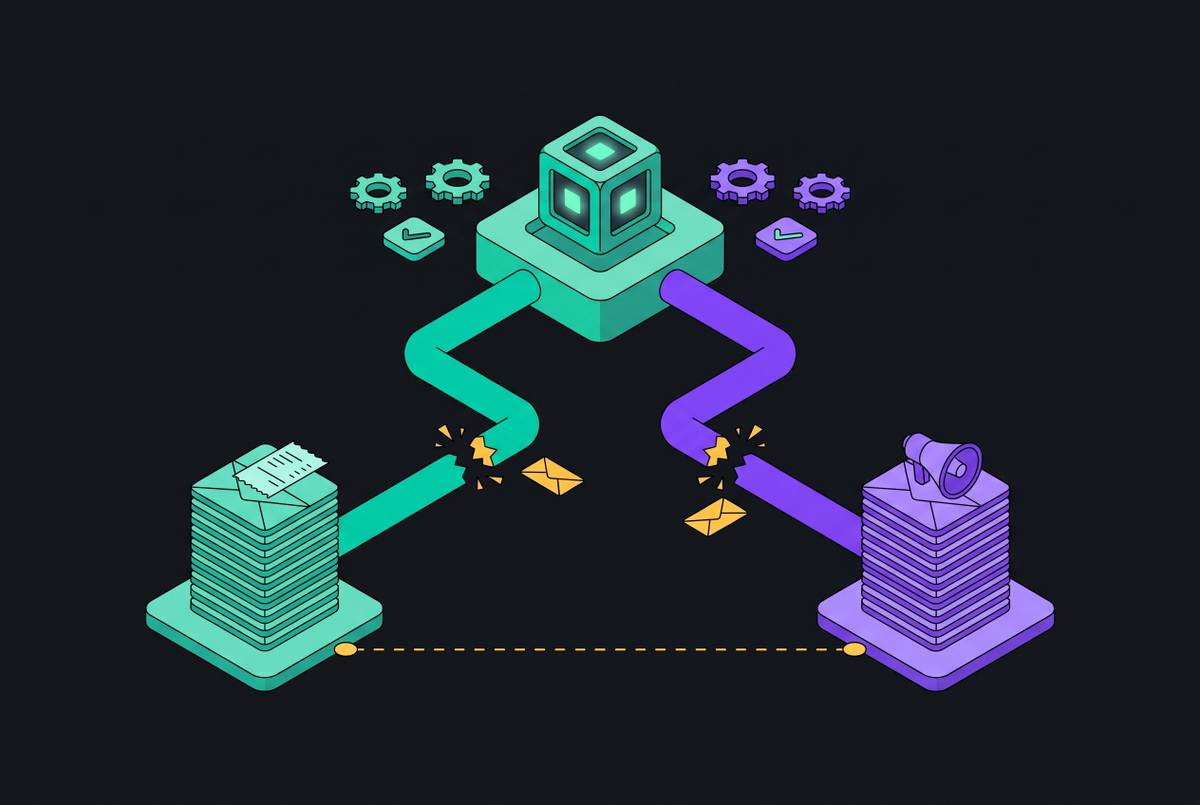
Infrastructure can still fail and models can still make errors even with linting in place. A tool call timeout can leave an agent uncertain whether a send completed, making a retry a potential duplicate. Infrastructure-level idempotency contains that failure across re-runs and webhook redelivery. An application-only check does not provide the same enforcement at the send boundary.
An agent should send from a domain separate from human sending infrastructure so that its behavior does not degrade the domain human senders use. Separation also makes reputation problems more diagnosable than they are on a shared domain. Warmup belongs in the same operational controls, either enforced by infrastructure or surfaced to the operator. New domains and mailboxes require a minimum of three to four weeks before light outreach, with four to six weeks or more before full production volume, rather than an agent’s instant ramp on cold infrastructure.
What MCP tooling adds to agentic email infrastructure and where its limits are
Anthropic announced Model Context Protocol, or MCP, on November 25, 2024, and donated it to the Linux Foundation’s Agentic AI Foundation in December 2025. The open protocol connects AI assistants to external systems over JSON-RPC through Tools, Resources, and Prompts. These represent callable functions, readable data, and reusable templates. For email, a single MCP server removes the need for separate per-service integration code for each compatible client.
Available email tools differ in operational scope. Google’s Gmail MCP developer preview reads and drafts but does not send. Microsoft Work IQ Mail, also in preview, requires a Microsoft 365 Copilot license and supports new messages, replies, drafts, search, and other email lifecycle operations. Those capabilities describe connectivity and available actions.
MCP is necessary for native MCP integration, but insufficient for safe autonomous dispatch. Clients that respect annotations can be configured to auto-approve reads and require confirmation for writes, yet the protocol does not enforce pre-send linting. A send_email tool without a validation layer inherits the underlying send endpoint’s gaps. AgentSend’s first-class MCP server illustrates the intended separation, exposing scoped send, draft, test, and manage tools with enforcement behind the send tool.
How AgentSend is built for this infrastructure pattern
AgentSend has pre-send enforcement built in as a required step. Its guardrails intercept malformed or non-compliant sends before dispatch and return a machine-readable error with a specific fix. Unrendered variables are returned with their name and location, and missing List-Unsubscribe requirements cause rejection. Compliance is on by default in this design.
The same layer checks suppression state for every recipient. The platform also manages SPF, DKIM, and DMARC for sending domains by default, rather than leaving developers to assemble those authentication components manually. Its unified API and first-class MCP server make the enforcement available to agent workflows through distinct interfaces. The server is a platform component, and its separate tools allow permissions to match the agent’s role.
That architecture has an explicit use boundary. AgentSend supports product and opted-in marketing email, while cold email use is not supported and the restriction is enforced at the platform level. The basis for evaluating it is the enforcement behind the operation.
What a developer should verify before handing an agent the keys to a sending domain
Before giving an agent production access, a developer should use these questions to check the infrastructure. Does the endpoint reject unresolved variables, missing unsubscribe requirements, and suppressed recipients before dispatch, with structured errors identifying the problem. Is unsubscribe enforcement on by default, without anyone having to turn it on by hand. The test is rejection before delivery.
Does the API enforce business-event idempotency keys on transactional sends, and does the inbound webhook handler check message IDs against a durable store before starting another execution loop. Does the API key or MCP scope allow only the read, draft, test, or production-send operations the agent needs. These controls should still work when an agent repeats a step or asks to do something outside its role.
Is the sending domain isolated from human infrastructure, and has the domain and mailbox completed warmup appropriate to the intended volume. Are per-agent limits and per-recipient-domain caps enforced at the API layer. A cleanly rendered message is not evidence that an unrestricted production ramp is safe.
The agent starts with access to reads, then gets access to drafts and test sends to small segments, then sends production email under supervision before it can send on its own. Each stage needs exit criteria. If supervised sends run for a sustained period without compliance or targeting mistakes, that is evidence that the infrastructure is working.