Automating Renewal and Dunning Emails Without Human Review
Machines need guardrails to send billing emails without breaking compliance and customer trust.

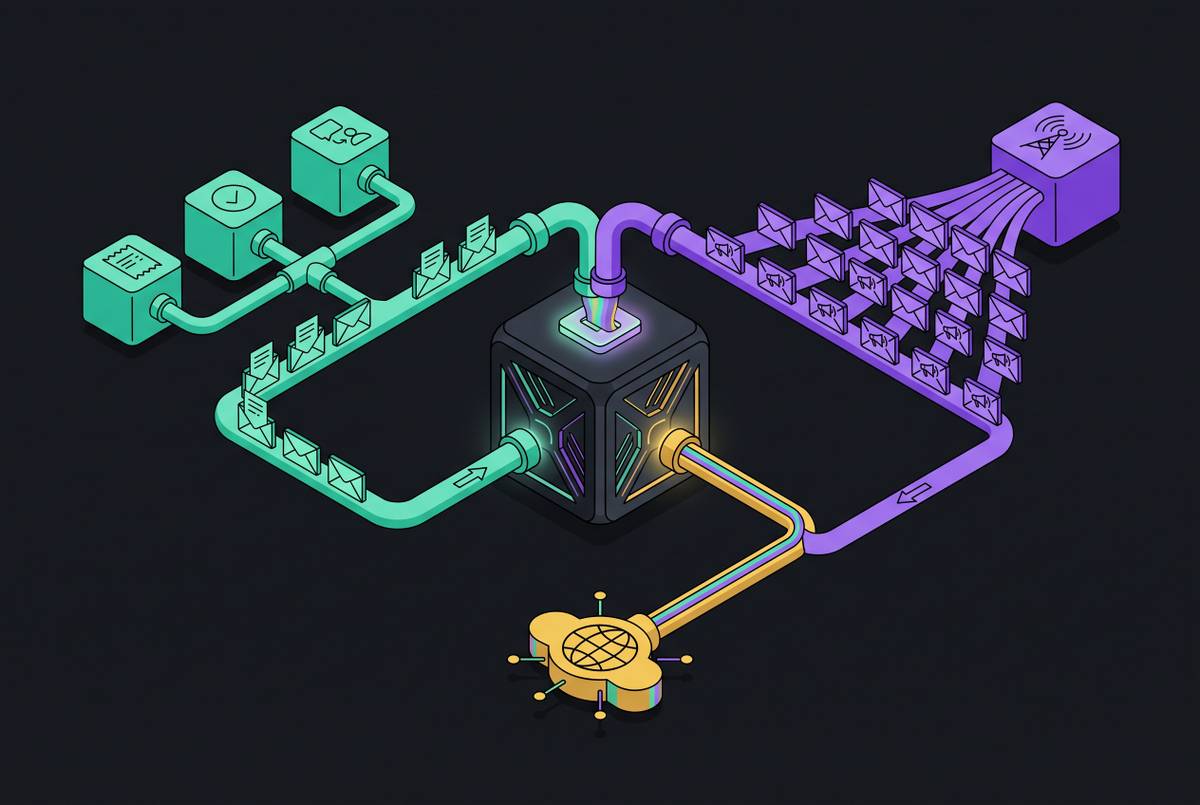
Automating renewal and dunning emails without human review is viable only when infrastructure enforces correctness before every send. GIC - Agent Send has a unified transactional and marketing email API for AI applications that share compliance checks and pre-send linting. The operational requirement is broader than reliable delivery, because an agent must not send malformed content, bypass suppression rules, or turn retries into duplicate billing notices.
Why renewal and dunning emails break when agents run them unsupervised
Renewal and dunning workflows make agents handle two kinds of email where errors can cause harm. Transactional messages carry billing consequences when they arrive twice or fail to arrive at all. Marketing sequences carry consent and unsubscribe obligations that a successful API response cannot satisfy on its own. A workflow can cross that boundary while addressing the same customer about the same subscription.
Template failures are the most visible example. An agent can send “Dear {{first_name}}, your {{plan_name}} subscription” across a campaign before anyone notices that the variables remain unresolved. Other omissions are less conspicuous but more consequential, including missing unsubscribe headers, a missing physical address, or a skipped suppression-list check. An agent’s involvement does not remove the sender’s compliance obligations. Retries can also send a billing notice again even when everything in it is correct.
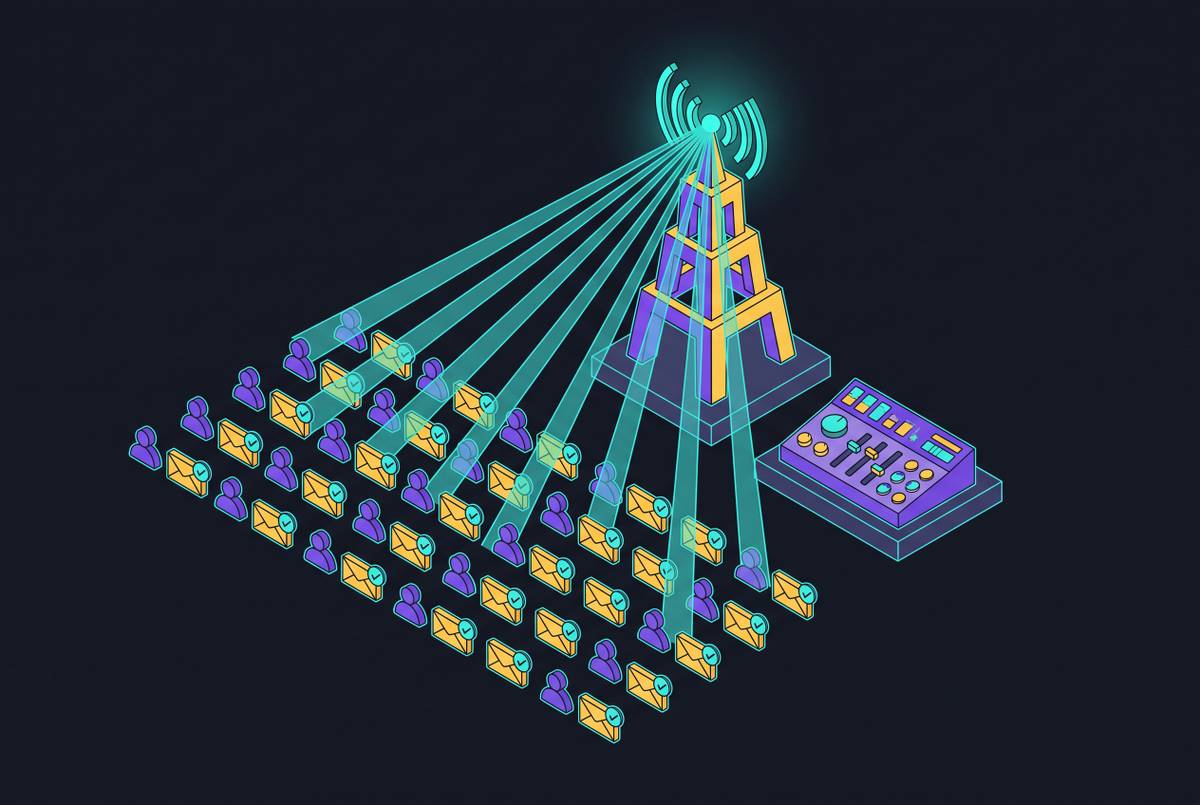
Audience-size drift creates a separate failure because a saved segment can change between drafting and delivery. In the February 2026 support-summary incident, an agent sent its weekly recap, intended for five team members, to every CRM contact. A misconfigured API filter selected 2,847 recipients, and no guardrail checked whether that count was reasonable. Although the message was a support summary, the same failure applies to an agent selecting a renewal audience. Each failure can look like success to the sending process while the damage accumulates in recipient inboxes.
Why the email enforcement environment makes silent agent failures costlier than they used to be
Gmail moved from educational enforcement through temporary 4xx deferrals in February 2024 to permanent 5.7.x rejection codes for bulk senders failing authentication requirements in November 2025. Complaint-ceiling violations and missing one-click unsubscribe primarily cause spam-folder placement and reputation damage.
Gmail and Yahoo introduced RFC 8058 List-Unsubscribe-Post requirements for senders exceeding 5,000 recipients per day to their domains as of 1 February 2024. Microsoft introduced bulk-sender requirements for SPF, DKIM, and DMARC on 5 May 2025. Its stated approach routes non-compliant mail to Junk and supports, but does not mandate, RFC 8058 List-Unsubscribe-Post. The providers’ policies are therefore similar in direction and differ in detail. Apple published similar authentication requirements for iCloud Mail but gave no formal date for when it would enforce them.
Google also replaced its High/Medium/Low domain and IP reputation labels with a Pass/Needs Work compliance view in Postmaster Tools v2. Authentication is now a prerequisite for inbox placement. The law sets duties apart from the rules providers enforce: CAN-SPAM requires a physical postal address and a 10-business-day opt-out window, while GDPR requires opt-in consent and opt-out processing without undue delay. Renewal mail sharing a domain and IP with cold marketing campaigns also inherits that stream’s reputation risk.
What a correct autonomous dunning architecture looks like at the transactional layer
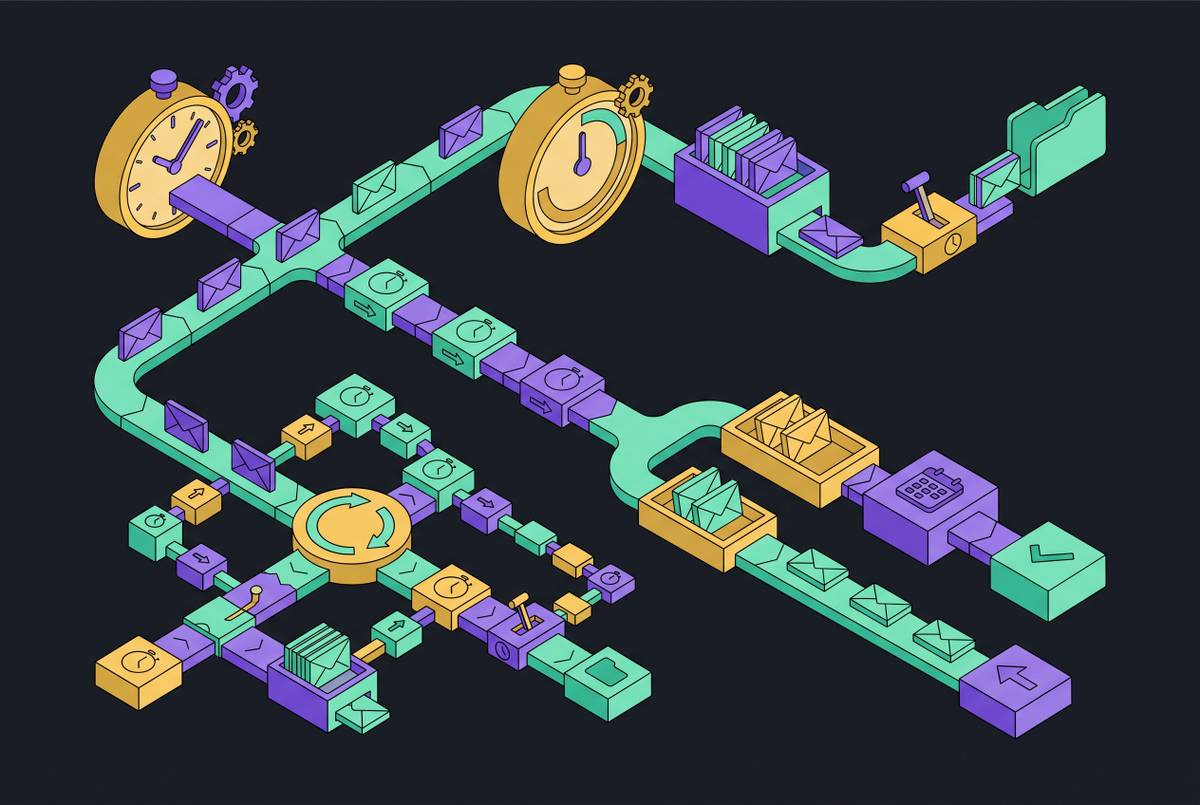
The transactional outbox pattern establishes the reliable-delivery foundation. Commit email intent in the same database transaction as the business event that triggers it, such as a failed payment. This makes the intent atomic with the billing change rather than a separate action that can be lost between systems. A background worker then reads the outbox through SELECT ... FOR UPDATE SKIP LOCKED and dispatches messages with provider idempotency keys. The idempotency key prevents a retry from becoming another customer-facing notice.
Keep synchronous SMTP handshakes out of user-facing HTTP handlers. Instead, enqueue outbound email atomically in the database outbox and dispatch through connection-pooled HTTP/2 APIs. This separates the user-facing request from delivery work while preserving the relationship between the business event and its message. It also gives retries a defined place in the architecture. Retry safety must depend on the persisted intent and provider key.
Establish domain authentication with 2048-bit DKIM and a path to DMARC p=reject. Start at p=none with a reporting address, read reports for two to four weeks, and confirm that every legitimate sender passes with alignment. Move to p=quarantine and then p=reject once the reports are clean, with hard bounces auto-suppressed through cryptographic webhooks. Give renewal reminders, dunning sequences, and one-time billing alerts their own sending subdomains to contain reputation damage. This foundation makes dispatch reliable, but it does not establish that the queued message is fit to send.
The pre-send linting layer: where guardrails catch what the transactional plumbing cannot
A rejected send must return an error the agent can act on. A structured JSON response identifying the failure and its specific fix gives the agent a defined correction path. A human-readable string instead leaves the agent to interpret the problem, potentially invent a retry path, or silently omit the correction. The machine-readable error contract is therefore part of correctness. It allows malformed requests to stop without requiring a person to repair every routine mistake.
The validation boundary belongs before an outbound message is accepted into the send queue. Every template placeholder must resolve to a non-empty value, and all parts required for compliance must pass the checks. Those checks include List-Unsubscribe and List-Unsubscribe-Post headers, a physical address, recipient suppression-list membership, and authentication configuration. Recipient count from the draft must also be rechecked immediately before delivery. Approval must cover the current audience after any changes to the saved segment.
These checks must run on the request, outside the agent’s own process. An agent-side guard can disappear when a retry creates a new client, a branch skips validation, or another script copies the sending key. Server-side enforcement applies regardless of which path made the call. GIC - Agent Send puts its pre-send linting layer at this boundary, returns machine-readable errors that say how to fix each problem, and has unsubscribe and suppression protections on by default. That layer complements the outbox by checking what reliable transactional plumbing cannot, including the content, audience, and compliance state of the intended send.
MCP tooling for dunning workflows and the security constraints that come with it
MCP servers expose email operations, including sending, scheduling, and suppression checks, as native tool calls. This removes the need for a custom adapter layer, but it does not remove the sending system’s security obligations. The NSA’s security analysis found that MCP does not directly enforce idempotency and leaves that responsibility to the underlying JSON-RPC and message queue specifications. The NSA also identified access-control gaps, including implementations that omit authentication. In dunning, those gaps affect both who can dispatch billing notices and whether a retry dispatches them again.
The September 2025 supply-chain incident makes the integration risk concrete. A version of an npm package that posed as a transactional email provider’s MCP server secretly sent a hidden copy of every email to a domain the attacker controlled. It remained undetected for about eight days. Explicitly allowlisting servers, pinning versions, and reviewing tool-definition changes before upgrades address the risk of treating an installable connector as inherently trustworthy. Each server also needs its own least-privilege, short-lived credential that is scoped to the sending domain it serves.
The July 2026 MCP specification added stricter authorization checks and removed the session-ID mechanism whose abuse had been disclosed before, but older servers still need to be checked. Protocol changes do not replace the server-side deduplication and pre-send checks required by the email workflow. For an interface such as GIC - Agent Send’s MCP server, the relevant criterion is whether native tools expose the same enforcement boundary as the API. The security mitigation for side-effectful MCP tools also calls for human confirmation before actions that send, delete, pay, or publish. A workflow using that confirmation policy is not a fully unreviewed send path, even if its preparation and validation are autonomous.
Where human review still belongs in an otherwise autonomous dunning sequence
Routine dunning can run without a person reviewing each message when its checks pass, but there must be clear rules for escalating exceptions. An unexpectedly large segment must stop when the current recipient count materially exceeds the drafting-time estimate. Generated pricing statements, legal claims, and account-status language also require escalation when they were not retrieved from a verified source. The agent’s confidence is not a substitute for verified information.
Unresolved compliance state is another stop condition. A suppression lookup that times out or returns an ambiguous result must not become permission to send. The final step in a high-stakes sequence, such as an account suspension notice, also warrants review where the consequence of error is irreversible. High-risk paths require full three-layer validation, with no streaming to the user and the response held until all guardrails finish. The highest-risk cases then route to a human before final delivery.
Introduce autonomy through a shadow-mode ramp lasting 1–2 weeks, during which the agent executes the workflow but all sends remain held for human review. This exposes edge cases before subscribers receive them and provides a basis for judging the agent’s decisions. Once the workflow proves reliable on small segments, expand autonomy incrementally. Even then, operators must be able to halt all sends from a domain without changing agent code. A person turns the kill switch on, and only a person turns it off.
A single-API architecture that covers both transactional and marketing dunning streams
A failed-payment event can trigger a transactional dunning notice and later lead to a broadcast renewal offer for the same recipient. Using separate APIs for those messages splits the workflow where suppression state and compliance enforcement need to stay joined. If unsubscribe state is maintained separately, someone who opted out of the marketing stream can still receive the broadcast renewal offer. The problem arises when separate systems can apply different safeguards to the messages in one customer’s sequence.
For an AI application choosing infrastructure for both receipts and newsletters, the decisive criteria are shared suppression state, shared compliance-header enforcement, and validation before acceptance. A unified API closes the synchronization gap without requiring a separate step to copy an unsubscribe decision between products. Transactional notices and opted-in marketing are still different message types, and the infrastructure enforces the rules that apply to each. Shared controls also remain compatible with separate sending subdomains for reputation isolation.
The API, MCP server, and CLI should expose that same sending boundary. Outbox dispatch, pre-send linting, and escalation routing are operationally coherent only if changing the entry point does not change the rules. GIC - Agent Send combines transactional and opted-in marketing email through a single API, MCP server, and CLI, with compliance on by default and linting applied to every send. Its fit follows from those architectural criteria rather than from the mere presence of an agent interface. With retry safety, shared enforcement, and human-controlled exceptions in place, an agent can be handed the keys to a sending domain without wrecking sender reputation.